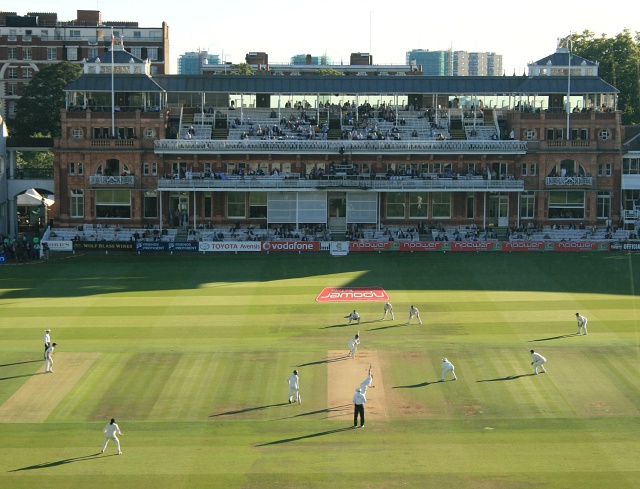
India recorded a resounding 270‑run victory over England in the inaugural women’s Test match held at Lord’s on July 13, 2026. The win not only gave the side a memorable first‑ever Test on cricket’s most iconic ground but also marked the second‑largest margin of runs for India in women’s Test cricket, the fourth biggest overall in the format’s history.
Historic Triumph at Lord’s
The match was historic because Lord’s had never hosted a women’s Test before, despite staging internationals since 1884 and its first women’s one‑day international in 1976. After a wait of half a century, the Marylebone Cricket Club finally opened its doors to a four‑day women’s Test, scheduled from July 10 to July 13. India’s success in that maiden encounter adds a new chapter to the ground’s storied legacy and underscores the growing relevance of the longest format in the women’s game.
From a tournament perspective, the win arrives at a time when the women’s Test calendar is expanding, with more boards committing to multi‑day fixtures. A victory of this magnitude at Lord’s will likely encourage the ICC and national boards to prioritise similar opportunities, providing players with a platform to showcase endurance and skill beyond the limited‑overs arena.
Gaud’s Five‑For and Bhatia’s Century
England’s first innings collapsed to 170 as 22‑year‑old medium‑pacer Kranti Gaud tore through the top order with figures of five wickets for 37 runs. Her performance earned her a place on the Lord’s Test honours board, a rare feat reserved for those who score a century, take five wickets in an innings or claim ten wickets in a match at the venue. Gaud’s ability to extract movement on a traditionally flat deck highlighted the value of maintaining a consistent line outside off stump, prompting several England batsmen to play at balls that seamed away.
In response, India posted a solid 285 in their first innings, built on half‑centuries from Harmanpreet Kaur, Smriti Mandhana and Deepti Sharma. The real turning point came with the unbeaten 113 from wicket‑keeper batter Yastika Bhatia, whose century not only steadied the innings but also secured her name on the honours board alongside Gaud. Bhatia’s innings displayed classic Test temperament—she rotated strike patiently, punished loose deliveries and capitalised on the occasional short ball, demonstrating why she is becoming a linchpin in India’s middle order.
Tactical Shifts and the Declaration
After establishing a first‑innings lead of 115 runs, India opted to declare at 341 for seven on the third day, setting England a daunting target of 457. The declaration was a calculated risk, reflecting confidence in the bowling attack’s ability to exploit any residual moisture and the wear that tends to appear on a Lord’s pitch after prolonged exposure. The decision placed immense pressure on England’s batting lineup, forcing them to negotiate a steep run‑rate while negotiating the lingering swing and seam.
England’s chase never got off the ground. They were bundled out for 186, falling 270 runs short of the target. The bowling unit maintained a relentless barrage of short‑pitched deliveries and well‑disguised slower balls, which disrupted the rhythm of the English batsmen. Notably, the partnership between Gaud and the spinners created pressure from both ends, ensuring that no batsman could settle at the crease for long.
Test cricket at Lord’s has traditionally favoured bowlers who can extract movement early, and India’s strategy mirrored that principle. By mixing pace with spin and varying lengths, they kept the opposition guessing, a tactic that proved decisive in wrapping up the match inside four days.
What Comes Next for Both Sides
The result carries implications beyond the scoreboard. For India, the victory adds momentum to their aspirations of becoming a regular contender in women’s Test cricket. With a core of experienced campaigners like Harmanpreet Kaur and emerging talents such as Gaud and Bhatia, the side appears well‑positioned to challenge top‑ranked teams in future multi‑day encounters, including prospective fixtures against Australia and New Zealand.
England, meanwhile, face a period of transition. The match marked the final international appearances for stalwarts Tammy Beaumont and Heather Knight, both key members of the squad that lifted the ICC Women’s Cricket World Cup at Lord’s in 2017. Their retirements open space for younger players to step up, but also expose a potential leadership vacuum that the selectors will need to address swiftly if England hopes to remain competitive in the longer format.
Looking ahead, the success of this inaugural women’s Test at Lord’s is likely to pave the way for more regular fixtures at the venue. Administrators from both boards may lobby for a recurring women’s Test slot in the English summer calendar, mirroring the tradition of the men’s Ashes. Such a development would not only enhance the prestige of the women’s game but also provide fans with another marquee contest to celebrate the sport’s rich heritage at the Home of Cricket.