
-(1).jpeg?w=300&resize=300,300&ssl=1 "Women's T20 World Cup 2026: 5 reasons India can win the title")


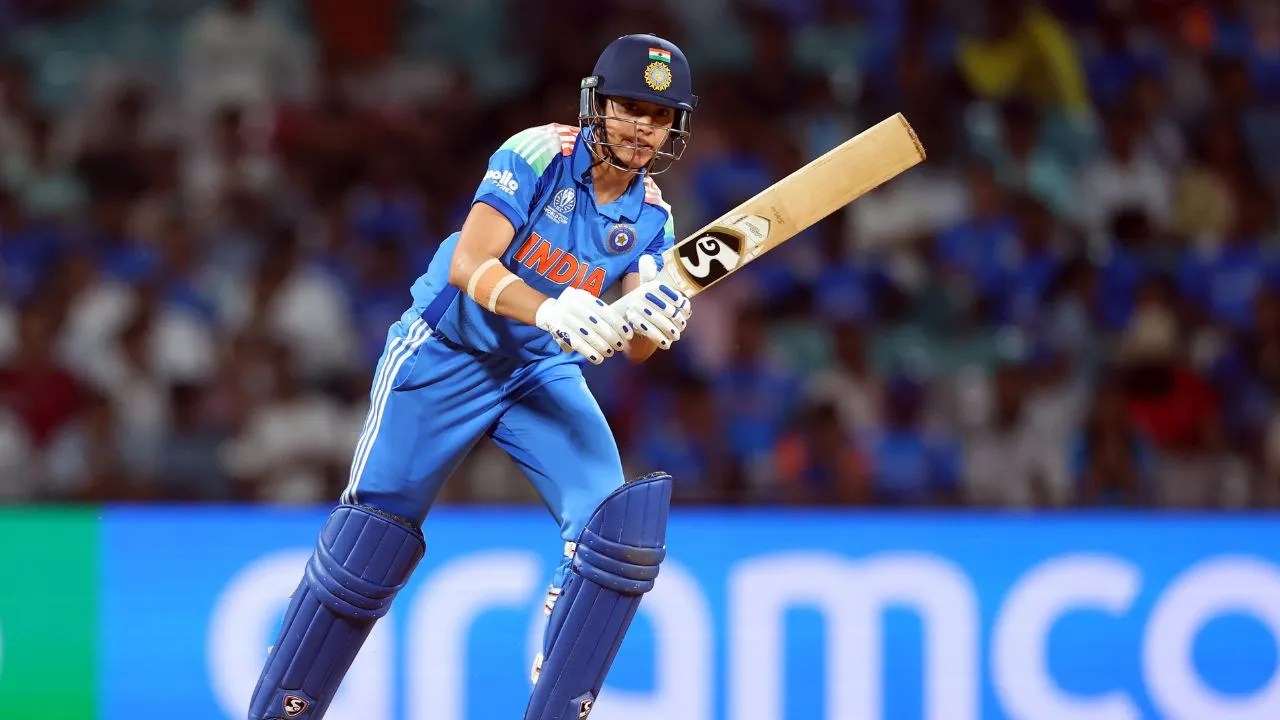
Smriti Mandhana is India’s best batter. She is arguably the most aesthetically pleasing left-hander in women’s cricket. She has won ICC Women’s Cricketer of the Year. She has a T20 World Cup batting average of 21.83 and has never lifted a T20 World Cup trophy.
Tonight at Edgbaston, a ground where she has spent significant time playing cricket in England, that personal gap meets the biggest stage of her format. Few batters in women’s cricket look more suited to T20 cricket than Smriti Mandhana. Few players have carried expectations for so long. Yet the trophy that feels destined for her cabinet remains missing.
India begin another T20 World Cup campaign against Pakistan. For Mandhana, it is another chance to change the one line that still follows her career.
Smriti Mandhana’s T20 World Cup record tells two different stories
Across six T20 World Cups before the 2026 edition, Mandhana has scored 524 runs in 25 innings with a highest score of 87. Her best tournament came in South Africa in 2023 when she struck 87 against Ireland and finished with 149 runs in the competition.
Yet the bigger story is India’s journey rather than her numbers. In 2014 and 2016, India exited early. In 2018, they topped their group but suffered a dramatic semi-final defeat against England. In 2020, they reached the final at the Melbourne Cricket Ground only to be overwhelmed by Australia. The 2023 campaign ended in another heartbreaking semi-final loss, this time against Australia by five runs and in 2024, they faced a group stage exit.
Then came 2025, and Smriti Mandhana played a central role as India finally broke their World Cup drought by winning the ODI World Cup. As vice-captain, she scored a magnificent 45 in the final and helped India achieve something generations had chased.
That contrast is what makes her T20 World Cup story so fascinating. The same player has experienced ultimate success in one World Cup format and repeated heartbreak in the other.
Why T20 remains both her best and hardest format
Smriti Mandhana’s overall T20I record is exceptional. She enters this tournament with 4,333 runs in 166 matches, the second-highest tally in women’s T20I history. Her strike rate of 124.54 and 33 half-centuries underline remarkable consistency.
Yet T20 cricket also exposes the one challenge that has followed her career. Smriti Mandhana is a rhythm batter. Her cover drive is among the finest shots in world cricket. Her flick through midwicket is equally elegant. Both shots become devastating once she spends a few overs at the crease.
T20 cricket does not always offer that luxury. An opener is often expected to attack immediately, especially in World Cups, where powerplay runs decide matches. Smriti Mandhana has occasionally found herself caught between aggression and accumulation. Attack too early and she risks exposing her weakness against the turning ball. Take time and the scoring rate comes under scrutiny.
That tension has existed throughout her T20 career. It is also why her ODI numbers have historically looked stronger. Fifty overs allow her game to breathe. Twenty overs demand instant answers.
Why England could finally suit her perfectly
If there is one place where optimism feels justified, it is England. Smriti Mandhana knows these conditions better than most overseas batters. She has played in The Hundred and spent multiple English summers facing high-quality attacks.
English surfaces reward timing more than brute force. Batters who can find gaps through the off side often prosper. Few players in women’s cricket manipulate that region better than Mandhana.
Edgbaston in particular has traditionally rewarded stroke-makers willing to trust the bounce. That matters because Mandhana is at her best when she can free her hands through cover and point.
Unlike slow subcontinental surfaces where spinners dominate from the start, Edgbaston generally offers enough pace for attacking batters to play their natural game.
If there is a T20 World Cup venue designed for Mandhana’s strengths, this might be it. India will know that a fluent start from her could set the tone for the entire campaign.
The Sadia Iqbal challenge India cannot ignore
Pakistan’s biggest threat is unlikely to come from pace. It will come from left-arm spinner Sadia Iqbal. Over the last few years, Sadia has established herself as Pakistan’s most reliable T20 bowler. She attacks the stumps, changes pace cleverly and forces batters to manufacture scoring opportunities.
That creates an interesting battle. Smriti Mandhana has occasionally struggled when spinners deny her width early in an innings. Teams often target her with a packed off-side field and challenge her to hit against the turn.
The dismissal pattern is familiar. The drive comes slightly early. The leading edge appears. Or she tries forcing a scoring option before settling.
Pakistan will almost certainly attempt that approach. Expect Sadia to attack the stumps and prevent Mandhana from freeing her arms through extra cover. If Pakistan can keep her quiet during the powerplay, pressure naturally shifts onto India’s middle order. The challenge for Mandhana is straightforward. Survive the first phase, and the matchup starts favouring her instead.
Go to Source
Author: Sonanchal Gautam


-(1).jpeg?w=768&resize=768,0&ssl=1 "Women's T20 World Cup 2026: 5 reasons India can win the title")


